
What Is Compounded Semaglutide?
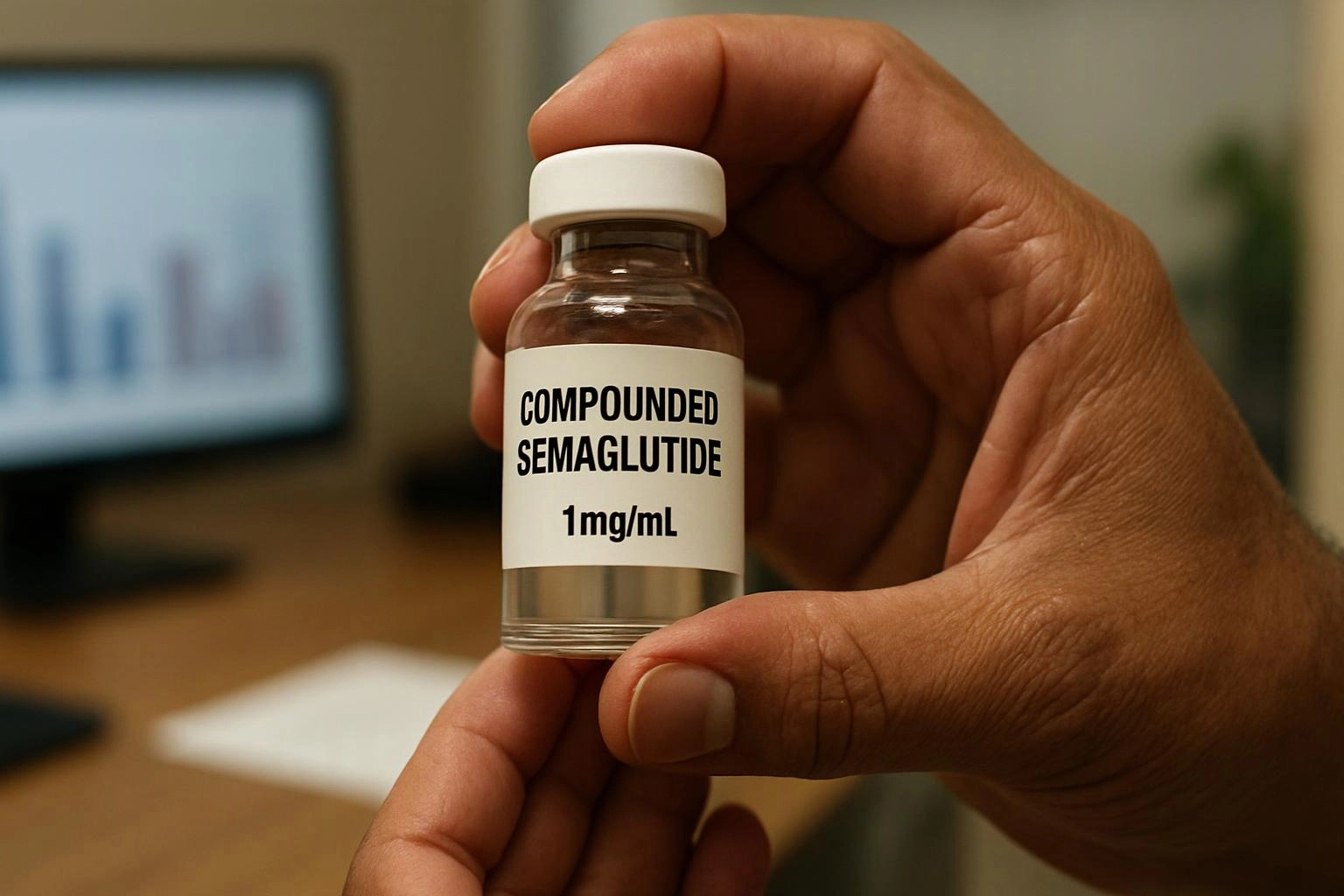
Compounded Semaglutide is a medication that a pharmacy prepares using semaglutide as an active ingredient. A prescriber may order it for a patient's weight management needs. The preparation differs from a drug made by a manufacturer and sold under a brand name, even though both may contain semaglutide.
Quick Facts About Compounded Semaglutide
- Category
- Compounded medication
- Used for
- Weight management
- Common confusion
- Assuming all semaglutide products are identical
- Often discussed with
- Compounded Weight-Loss Medication Injury Claims
Key Takeaways About Compounded Semaglutide
- Compounded preparations aren't individually approved by the FDA.
- Labels identify the pharmacy and explain the medication's contents.
- A shared active ingredient doesn't make products identical.
How Compounded Semaglutide Works

Compounded semaglutide acts on a hormone pathway that helps control appetite. It can help you feel full and reduce hunger. A prescriber considers your health needs when ordering the medication. Related service: Compounded Weight-Loss Medication Injury Claims.
Related glossary terms: Failure to Warn, Negligence, Proximate Cause.
The preparation may come in a vial for injection. Its concentration describes how much medication is present in a given amount of liquid. Different concentrations can make the markings on a syringe mean different amounts of medication.
The pharmacy label identifies the preparation and may include directions from the prescriber. Other ingredients may differ between preparations.
From the Atlanta Auto Law team
When we review a compounded weight-loss medication injury claim, we look at the pharmacy records and prescription. We also examine the label and medical records. The source of the preparation and the timing of symptoms can shape our review of a possible claim.
Compounded Semaglutide in Practice: A Real-World Example
A person experiences severe symptoms after receiving a compounded weight-loss medication. In a potential injury claim, the person describes the symptoms and keeps the medication packaging for review.
Related Services
Related Terms
Failure to Warn
Failure to warn is a type of product liability claim involving an inadequate warning about a product’s risks.
Negligence
Negligence is a legal concept that describes a failure to use reasonable care when a person has a duty to do so.
Proximate Cause
Proximate cause is a legal connection between someone's conduct and an injury that makes the conduct a basis for legal responsibility.
Damages
Damages are money sought or awarded for harm in a legal claim.
Atlanta Auto Law
Have Questions About Compounded Semaglutide?
Contact Atlanta Auto Law for practical guidance on Compounded Semaglutide and related personal injury attorney work in East Point.