
What Is Failure to Warn?
Failure to warn is a type of product liability claim involving an inadequate warning about a product’s risks. The claim connects that warning to an injury. For example, a product may carry a warning that doesn’t clearly explain a danger a user is unlikely to recognize.
Quick Facts About Failure to Warn
- Category
- Product liability
- Used for
- Injury claims involving product warnings
- Common confusion
- A design defect claim
- Also called
- Inadequate warning
- Often discussed with
- Defective Product Claims
Key Takeaways About Failure to Warn
- The warning’s wording and placement both matter.
- Keep the packaging and instructions after an injury.
- A warning claim differs from a claim about faulty design.
How Failure to Warn Works
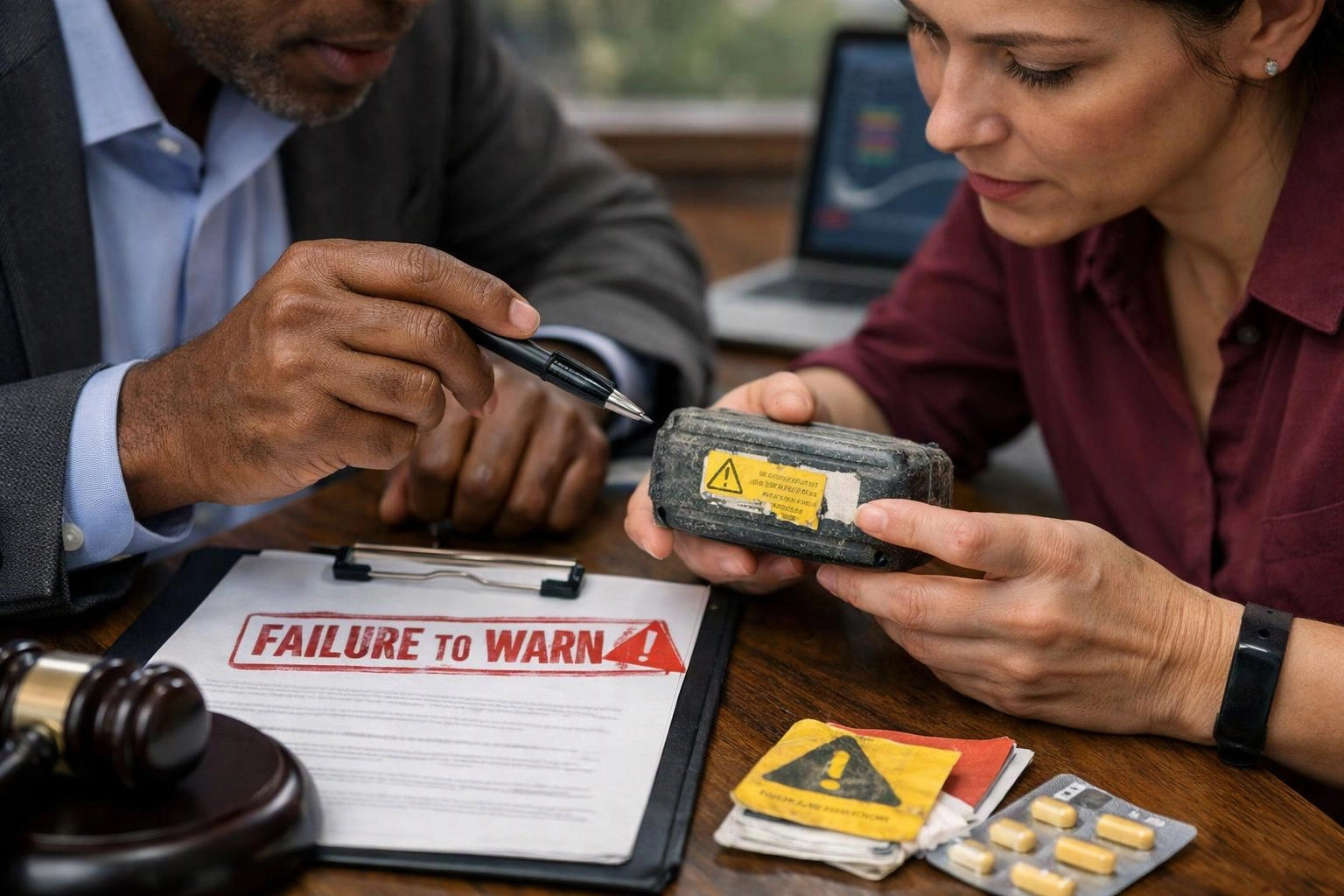
A failure to warn claim looks at the warning that reached the user. The words may appear on a label or in instructions. Their placement and wording can affect whether a user notices and understands the risk. Related service: Defective Product Claims.
Related glossary terms: Negligence, Breach of Duty, Proximate Cause.
The claim also examines the link between the warning and the injury. For example, a clear warning might have changed how someone used a product. The user’s actions and the product’s condition provide context for that question.
A warning claim differs from a design defect claim. A design claim focuses on how the product was made to work. A warning claim focuses on the information supplied about its use. The same injury may raise questions about both the design and the warning.
From the Atlanta Auto Law team
When we review a defective product claim, we look for the warning the user actually received. We compare the package and instructions with the account of the injury. A photo taken after the incident may help show where a warning appeared.
Failure to Warn in Practice: A Real-World Example
A portable battery’s package doesn’t warn that the battery may overheat during charging. A user suffers a burn after the battery overheats, raising a question about whether a clear warning would have changed the user’s actions.
Related Services
Related Terms
Negligence
Negligence is a legal concept that describes a failure to use reasonable care when a person has a duty to do so.
Breach of Duty
A breach of duty is a failure to meet a legal standard of care owed to someone else.
Proximate Cause
Proximate cause is a legal connection between someone's conduct and an injury that makes the conduct a basis for legal responsibility.
Damages
Damages are money sought or awarded for harm in a legal claim.
Atlanta Auto Law
Have Questions About Failure to Warn?
Contact Atlanta Auto Law for practical guidance on Failure to Warn and related personal injury attorney work in East Point.