Personal Injury Claim Preparation Checklist
Personal injury claim preparation checklist: gather accident evidence, medical records, employment information, expenses, insurance details, and communications, then organize them for review with Atlanta Auto Law during a Free Consultations appointment.
Request an Estimate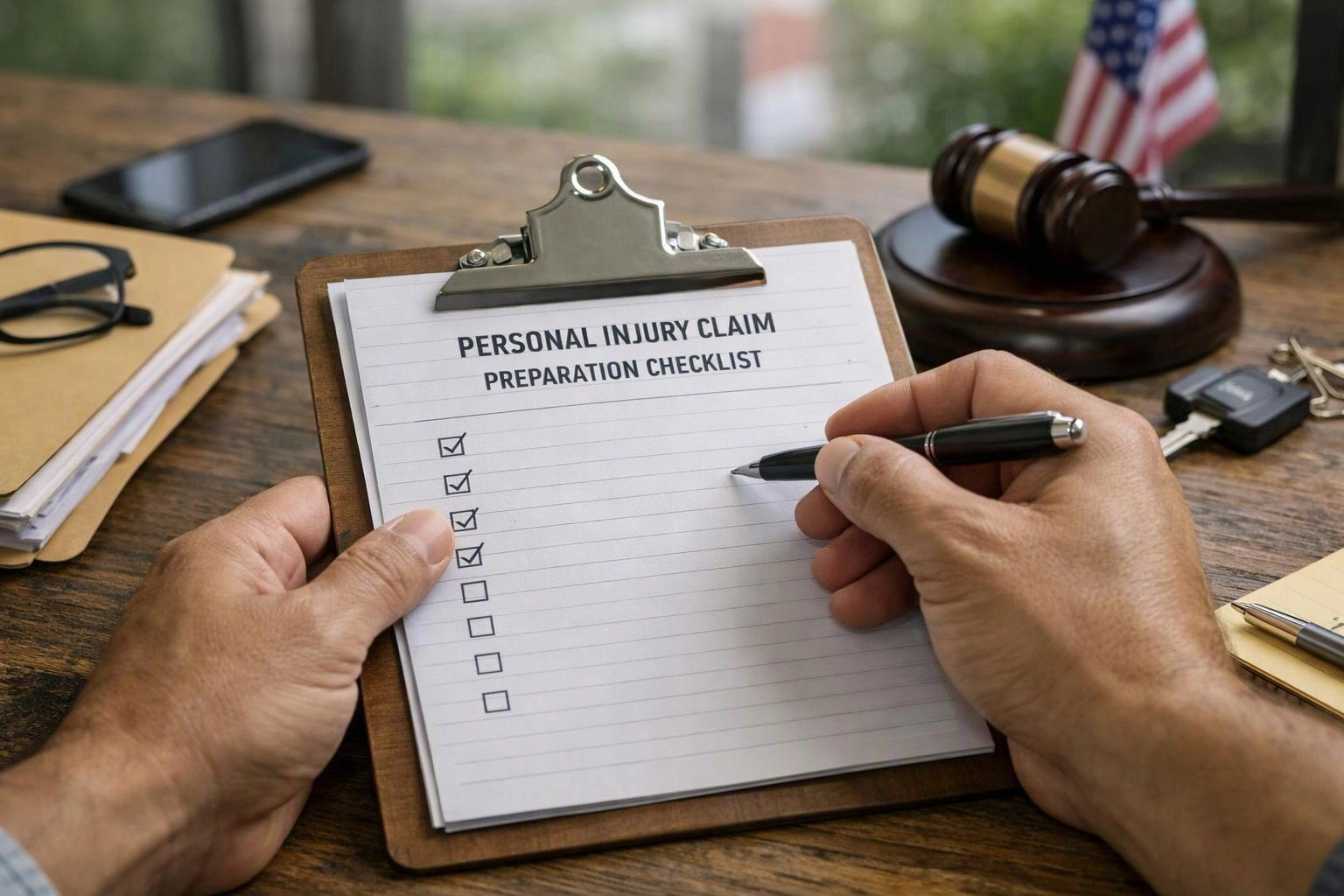
What to Gather Before Discussing a Personal Injury Claim
Personal injury claim preparation starts with gathering accident facts, injury records, insurance information, witness details, and communications. These materials help us understand what happened, who may be responsible, and how the injuries affected your life.
Write down the accident details while they are fresh. Include the location, conditions, people involved, statements made at the scene, and any property damage. Collect injury information from each medical provider and save every letter, email, text message, and call note connected to the insurance claim.
Personal Injury Claim Preparation Checklist
A claim documentation checklist gives us a clear starting point for reviewing liability, medical proof, and damages. Gather what you have and keep original files unchanged so evidence preservation remains possible.
Do not edit photographs, videos, messages, or electronic files. Our team can review the available materials and identify evidence that may need additional preservation.
How to Organize Documents for Attorney Review
Document organization should place records in a clear timeline with separate groups for the incident, treatment, financial losses, insurance, and communications. A consistent file system helps us compare the incident timeline with medical treatment and claimed damages.
Use folders for digital files and labeled sections for paper records. Keep claim correspondence together and protect private medical and employment information. Do not discard duplicates until our team has reviewed the claim file.
Build a Clear Accident and Treatment Timeline
An incident timeline connects the incident date to symptom history, medical appointments, diagnosis, treatment plan, and recovery. The timeline should show changes in symptoms and the care received after each change.
- Write the incident date, location, conditions, and immediate symptoms.
- List each medical appointment, provider, diagnosis, test, medication, and treatment recommendation.
- Note work restrictions, missed work, daily limitations, follow-up care, and changes in recovery.
- Attach related records to each timeline entry without altering the original documents.
When Legal Guidance and Claim Documentation Belong Together
Legal guidance and claim documentation belong together when the facts may affect liability, causation, or the value of damages. These situations often require coordinated evidence review and careful communication with insurers.
Our team sorts the available records into proof of responsibility, injury documentation, and financial or personal losses. That structure helps keep the legal consultation focused.
How Legal Guidance and Claim Documentation Work Together
Legal guidance and claim documentation work together by linking each important fact to the legal issue it may support. We use the organized claim file to test the evidence and plan the next step.
Better organization can reduce avoidable review work and help us focus resources on the issues that affect the claim. The cost of preparing a claim depends on its facts, evidence, medical issues, and legal needs, so we explain what our review includes during the consultation.
What Changes for Different Personal Injury Claims
Claim preparation changes with the incident type, responsible parties, available evidence, medical issues, employment impact, and applicable records. A truck accident claim may involve a commercial carrier, while a product liability claim may depend on product identification and preservation.
For a motor vehicle accident, truck accident, motorcycle accident, pedestrian accident, bicycle accident, bus accident, rideshare accident, hit-and-run accident, or drunk driving accident, preserve scene evidence, driver information, vehicle damage, witness details, and insurance records. Our team can assess traffic evidence, commercial coverage, app records, and possible responsibility.
Construction accident, slip and fall, dog bite, birth injury, nursing home abuse, and product liability claims require records tied to the location, care, product, animal, or facility. Spinal cord injury, traumatic brain injury, and amputation injury claims may also require detailed proof of long-term care and life-care needs.
Wrongful termination, workplace retaliation, whistleblower retaliation, and wage and hour claims depend on employment records, communications, workplace complaints, protected activity, time records, and pay statements. We organize these materials to examine the employment decision, retaliation evidence, whistleblower disclosure, or unpaid wages.
Vehicle, Pedestrian, Bicycle, Bus, and Rideshare Claims
Vehicle, pedestrian, bicycle, bus, and rideshare claims often depend on collision-scene evidence, vehicle damage, traffic camera footage, and driver information. Save the scene photographs, repair records, witness information, and every communication with an insurer.
Truck accident claims may add a commercial carrier, driver employment records, inspection materials, and company insurance issues. Motorcycle and bicycle claims may need clear proof of visibility, road conditions, protective equipment, and the impact location. Rideshare claims may also require rideshare app records showing the trip status and involved drivers.
Hit-and-Run and Drunk Driving Claims
Hit-and-run and drunk driving claims require prompt preservation of the police report, vehicle description, witness information, and available scene evidence. Write down everything you remember about the anonymous driver, vehicle, direction of travel, and statements made by witnesses.
A criminal investigation may create alcohol-related evidence or other records that affect the civil claim. Our team reviews the available reports and coordinates the liability analysis with the injury and damages documentation.
Construction, Slip and Fall, Dog Bite, and Product Claims
Construction, slip and fall, dog bite, and product claims require evidence showing the hazard, responsible party, condition, or item involved. Photograph the hazard condition and preserve clothing, damaged property, product packaging, and other physical evidence.
Construction claims may involve worksite records and safety records. Slip and fall claims may involve a property owner, inspection records, and notice of the condition. Dog bite claims may require animal ownership information. Product claims may depend on the product model, packaging, instructions, and recall information.
Birth Injury, Nursing Home Abuse, and Catastrophic Injury Claims
Birth injury, nursing home abuse, and catastrophic injury claims require detailed medical, care, and family records. Preserve birth records, care facility records, abuse documentation, treatment notes, and communications with caregivers.
Spinal cord injury, traumatic brain injury, and amputation claims may affect mobility, communication, work, and independence. Our team organizes records about long-term care, rehabilitation, assistive needs, and life-care needs so the damages evaluation reflects the continuing impact.
Wrongful Termination, Retaliation, Whistleblower, and Wage Claims
Wrongful termination, retaliation, whistleblower, and wage claims depend on a clear employment record and a dated account of workplace events. Save the termination notice, employment records, workplace complaint, retaliation evidence, and communications about protected activity.
Whistleblower claims may involve a disclosure and responses that followed it. Wage and hour claims may require wage records, time records, pay statements, schedules, and messages about work performed. We compare those records with the employer’s stated reason for the action or pay practice.
What to Bring to a Personal Injury Attorney Consultation
A personal injury attorney consultation is more productive when you bring organized incident records, medical information, loss documentation, insurance communications, and written questions. Bring what you have even if the claim file is incomplete.
Our intake form can help capture the incident history, responsible parties, medical treatment, insurance claim, and damages. We can explain which documents matter most after reviewing the facts.
Questions to Ask About Your Personal Injury Claim
Questions about liability, available evidence, responsible parties, damages, and the claim process help you understand the legal consultation. Ask how the facts may affect a settlement demand, settlement discussions, or litigation.
Useful questions include: What evidence supports liability? Which records are still needed? Who may be a responsible party? How are medical bills and lost wages documented? What damages may apply? How will insurance correspondence be handled? What decisions could move the claim toward settlement or litigation?
How Atlanta Auto Law Reviews Your Claim Preparation
Atlanta Auto Law reviews the incident history, supporting documents, injury records, insurance communications, and potential responsible parties to identify the next preparation steps. Our case intake begins with your account of what happened and the records you can provide.
We conduct an evidence review, organize medical documentation, examine the insurance claim, and assess liability and damages. Our legal strategy then focuses on preserving proof, addressing missing records, and presenting the claim in a clear and supported way.
Use our legal consultation option to discuss your claim preparation with our team.
Questions About Personal Injury Claim Preparation
Should I speak with an insurance adjuster before preparing my claim?
Speak with Atlanta Auto Law before providing a detailed statement or agreeing to a settlement when the claim involves disputed facts, serious injuries, or uncertain damages. Preserve the adjuster’s messages and requests so we can review them with the rest of the claim file.
What should I write down about an accident before contacting an attorney?
Write down the location, conditions, people involved, statements, visible injuries, medical care, property damage, witnesses, and communications about the accident. Keep the account factual and add dates to each later medical or insurance event.
How can I preserve photos, videos, and electronic evidence?
Preserve photos, videos, messages, and electronic files by keeping original versions, saving copies in a secure location, and avoiding edits or filters. Record where each file came from and do not delete related messages or posts.
What should I do if I do not have every document on the checklist?
Contact us with the documents you do have and explain which records are unavailable. Our team can identify useful substitutes, request additional materials, and organize the claim around the available evidence.
Can medical records support a personal injury claim if treatment is ongoing?
Yes, medical records can support a personal injury claim while treatment is ongoing by showing symptoms, diagnosis, care, restrictions, and changes over time. Continue following medical instructions and preserve new records and medical bills.
What information should I include in a personal injury attorney intake form?
A personal injury attorney intake form should include your contact information, incident facts, injury history, medical providers, insurance details, witnesses, employment impact, property damage, and communications with insurers. Include the names of possible responsible parties and attach organized records when the form allows it.