Truck Accident Evidence Mistakes That Can Hurt Your Claim
Truck accident mistakes to avoid include delaying medical care, failing to preserve evidence, discussing fault publicly, and accepting a settlement before the claim is evaluated; Atlanta Auto Law helps protect the evidence and build the claim record.
Request an Estimate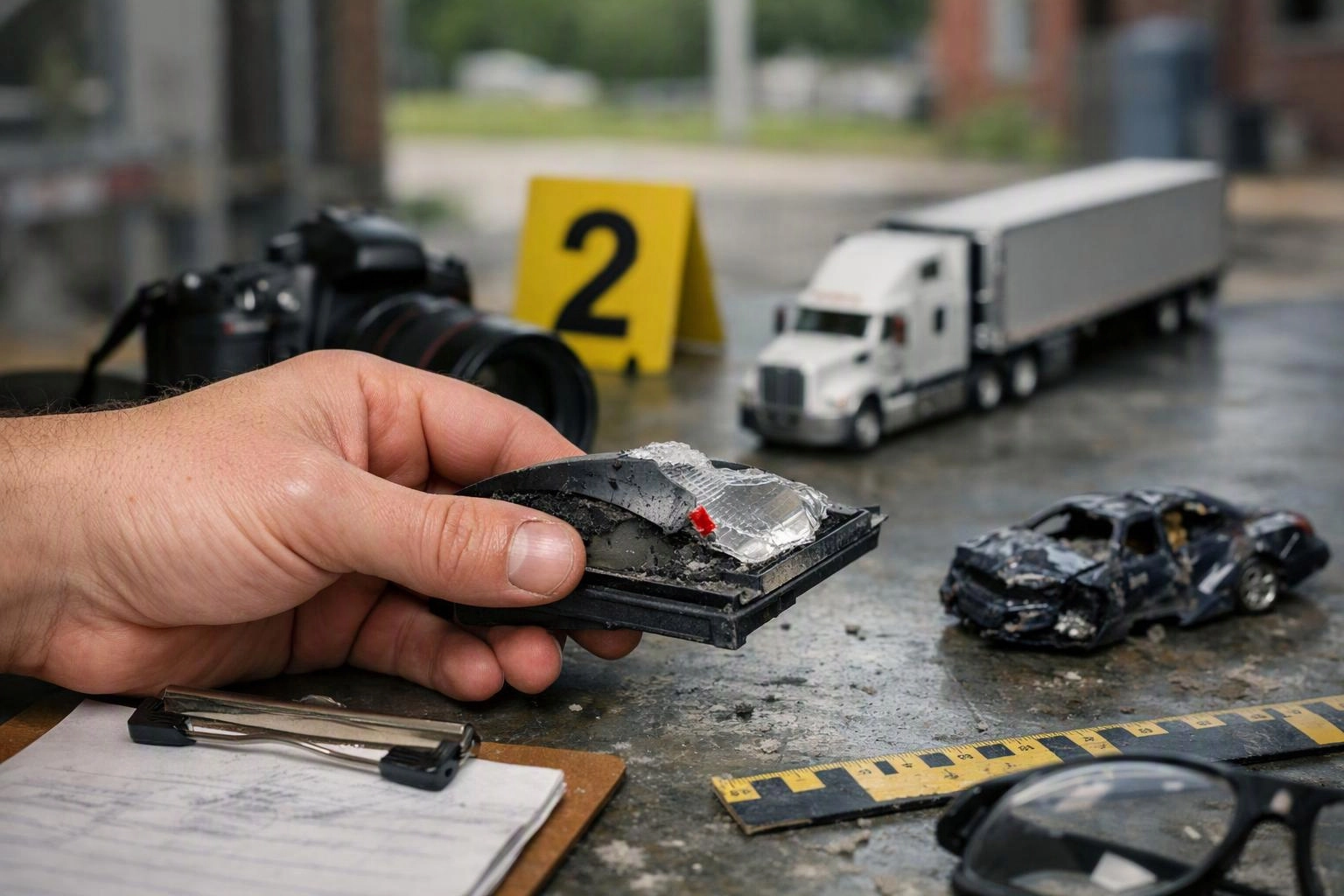
Why Evidence Mistakes Matter After a Truck Accident
Truck accident evidence mistakes can weaken liability and damages proof before the claim is fully investigated. A truck accident claim depends on records that show how the crash happened, who was responsible, and how the injuries affected your life.
Evidence may include the police report, photographs, medical records, witness statements, vehicle damage, and commercial trucking records. The insurance company may review those materials when assessing fault and damages, so missing or inconsistent information can make the claim harder to prove.
We protect the claim record by identifying important evidence early and organizing it around liability, causation, and damages. You can contact our Truck Accident Lawyer team for help reviewing the available proof.
The Truck Accident Mistakes That Can Weaken Your Claim
Truck accident mistakes often happen when a person is hurt, stressed, or dealing with several insurance requests at once. Each mistake can affect the crash investigation, claim evidence, or evidence preservation.
Our team looks at how each problem occurred, what proof may have been lost, and what steps can still strengthen the insurance claim. Early review helps us separate missing evidence from evidence that can still be obtained.
Mistake 1: Delaying Medical Care or Ignoring Symptoms
Delayed medical care can make injury symptoms harder to connect to the truck crash. Some conditions become more noticeable after the immediate shock fades, while an insurer may argue that a treatment gap weakens causation.
The cost of this mistake is a weaker medical record and more uncertainty about damages. We review medical records, treatment notes, diagnostic findings, and the timeline of symptoms to address those questions.
Seek medical care when symptoms appear, follow the treatment plan, and tell the medical provider how the crash affected you. We use consistent injury documentation to connect the treatment to the claim.
Mistake 2: Failing to Preserve Photos, Video, and Physical Evidence
Failing to preserve crash scene photographs, vehicle damage, dashcam footage, surveillance video, or physical evidence can remove useful proof from the claim. Video may be overwritten, damaged vehicles may be repaired, and debris may be cleared.
The cost is a thinner record of the road conditions, impact points, visibility, and vehicle positions. We identify available sources and request or preserve relevant materials when the evidence can still be located.
Save original photographs and video without editing them, and keep damaged property available when practical. Our team uses the remaining crash scene evidence to support the claim investigation.
Mistake 3: Giving a Recorded Statement Before Legal Review
A recorded statement to the truck insurer can create admissions before the claim investigation is complete. A claims adjuster may ask about speed, symptoms, lane position, or the moments before impact.
The cost is a statement that may be taken out of context or used to challenge liability and damages. We review the request, explain the issues it raises, and help protect the accuracy of the claim record.
Do not guess when you do not know an answer, and do not provide a recorded statement before understanding how it may be used. Direct insurance communications to our team when we represent you.
Mistake 4: Guessing About Fault or Apologizing at the Scene
Guessing about fault or apologizing at the scene can affect later fault determination. Stress can cause people to make statements without knowing the truck driver’s actions, road conditions, or other facts.
The cost is a statement that may be presented as an admission, even when the full circumstances support a different conclusion. Comparative negligence issues may also arise when an insurer relies on a scene statement.
Share basic safety information, cooperate with emergency personnel, and describe what you know without guessing. We compare scene statements with the police report, witness statements, physical evidence, and other records.
Mistake 5: Posting About the Crash or Injury Online
Social media posts about the crash, activities, travel, or recovery can become digital evidence in a claim defense. A short online statement may not show pain, restrictions, or the full context of a photograph.
The cost is an avoidable dispute over credibility, injury severity, or daily limitations. We assess existing online statements as part of the broader claim record and address how they may affect the insurance claim.
Avoid posting about the crash or injury, and review privacy settings without deleting relevant material. We help preserve the evidence and identify context that may be important to the claim.
Mistake 6: Deleting Messages, Photos, or Other Claim Records
Deleting text messages, emails, photographs, or other claim records can create a document preservation problem. Relevant records may include conversations with witnesses, insurers, employers, medical providers, or family members.
The cost can include a loss of helpful proof and questions about spoliation. We identify potentially relevant materials, preserve them in their original form when possible, and explain what should remain available.
Keep digital records, photographs, repair documents, and insurance correspondence. Do not alter or delete material connected to the crash, even when it seems unimportant.
Mistake 7: Accepting a Settlement Before the Claim Is Understood
Accepting a settlement offer before the claim is evaluated can end the right to seek more compensation. A settlement release may cover known injuries and future medical needs even when treatment is not complete.
The cost is a premature resolution that may not account for lost income, ongoing care, or the full effect of the injury. We review the offer, the release, the medical documentation, and the available damages evidence before advising on the claim.
Do not sign a settlement release until you understand what rights it gives up and how the offer compares with the documented losses. Our team develops the claim valuation from the available liability and damages proof.
Mistake 8: Handling a Trucking Claim Like an Ordinary Car Crash
A commercial truck claim can involve a motor carrier, a truck driver, company policies, and records that do not appear in an ordinary car crash file. Relevant materials may include electronic logging data, maintenance records, driver records, inspection materials, and federal trucking regulations.
The cost is missing evidence that may help explain fatigue, maintenance, training, vehicle condition, or rule compliance. We identify commercial trucking records and assess how they relate to the crash and the insurance claim.
Preserve notices, photographs, medical records, and communications from the commercial insurer. We work to obtain and organize the records needed for a complete crash investigation.
A Safer Evidence Checklist After a Truck Crash
A safer post-crash process protects both your health and the claim record. The following steps help preserve useful information while avoiding statements that may create confusion.
Take reasonable steps that do not place you or anyone else in danger. We can review what you saved and identify other evidence that may support the claim.
When to Call Atlanta Auto Law About a Truck Accident Claim
A truck accident lawyer can help when the claim involves serious injuries, disputed liability, or evidence controlled by a commercial insurer. Early legal review also helps protect records that may not remain available.
Contact our team when any of these situations apply:
How We Review Truck Accident Evidence
Atlanta Auto Law reviews the crash record, injury documentation, witness evidence, and trucking records to identify proof that supports liability and damages.
We begin with the available police report, photographs, vehicle information, witness accounts, and insurance correspondence. We then compare those materials with medical documentation to understand causation, treatment, and the effect on work and daily life.
Our team may examine crash reconstruction evidence, driver records, electronic logging data, maintenance records, and motor carrier information when those materials relate to the collision. We organize the evidence so the insurance claim reflects both the fault issues and the full injury record.
We also look for inconsistencies between the truck insurer’s position and the available records. That review helps us identify missing proof, preserve important documents, and respond to disputes about negligence or damages.
What to Bring When We Review Your Claim
The materials you bring help us understand the crash, the injuries, and the insurance claim. Do not delay contacting us because one item is missing; we can identify other ways to develop the record.
Helpful materials include:
Questions About Truck Accident Evidence Mistakes
Should I speak to the trucking company's insurance adjuster after a crash?
Atlanta Auto Law recommends reviewing a trucking company's insurance request before you give a recorded statement or discuss fault. The claims adjuster may use uncertain or incomplete answers when evaluating liability and damages.
What evidence should I save after a truck accident?
Save photographs, video, vehicle damage information, medical records, the police report, witness contact information, insurance correspondence, employment records, and relevant messages or emails. Commercial trucking records may also help explain the crash.
Can social media posts hurt a truck accident claim?
Yes, social media posts can hurt a truck accident claim when an insurer uses them to challenge injury severity, daily limitations, or credibility. Avoid posting about the crash or recovery, and preserve existing digital evidence.
Can I still bring a claim if I did not take pictures at the crash scene?
Yes, you may still bring a claim if you did not take pictures at the crash scene. Other evidence may include the police report, witness statements, vehicle damage records, medical documentation, surveillance video, and trucking records.
What trucking records can help prove how a crash happened?
Electronic logging data, driver records, maintenance records, inspection materials, dispatch information, and motor carrier records can help explain how a truck crash happened. We assess which records relate to driver conduct, vehicle condition, and federal trucking regulations.
Protect Your Truck Accident Claim Record
Atlanta Auto Law helps preserve crash evidence, evaluate injury documentation, and address communications with the commercial insurer. Contact our team for a review of the evidence and the next steps for your claim.