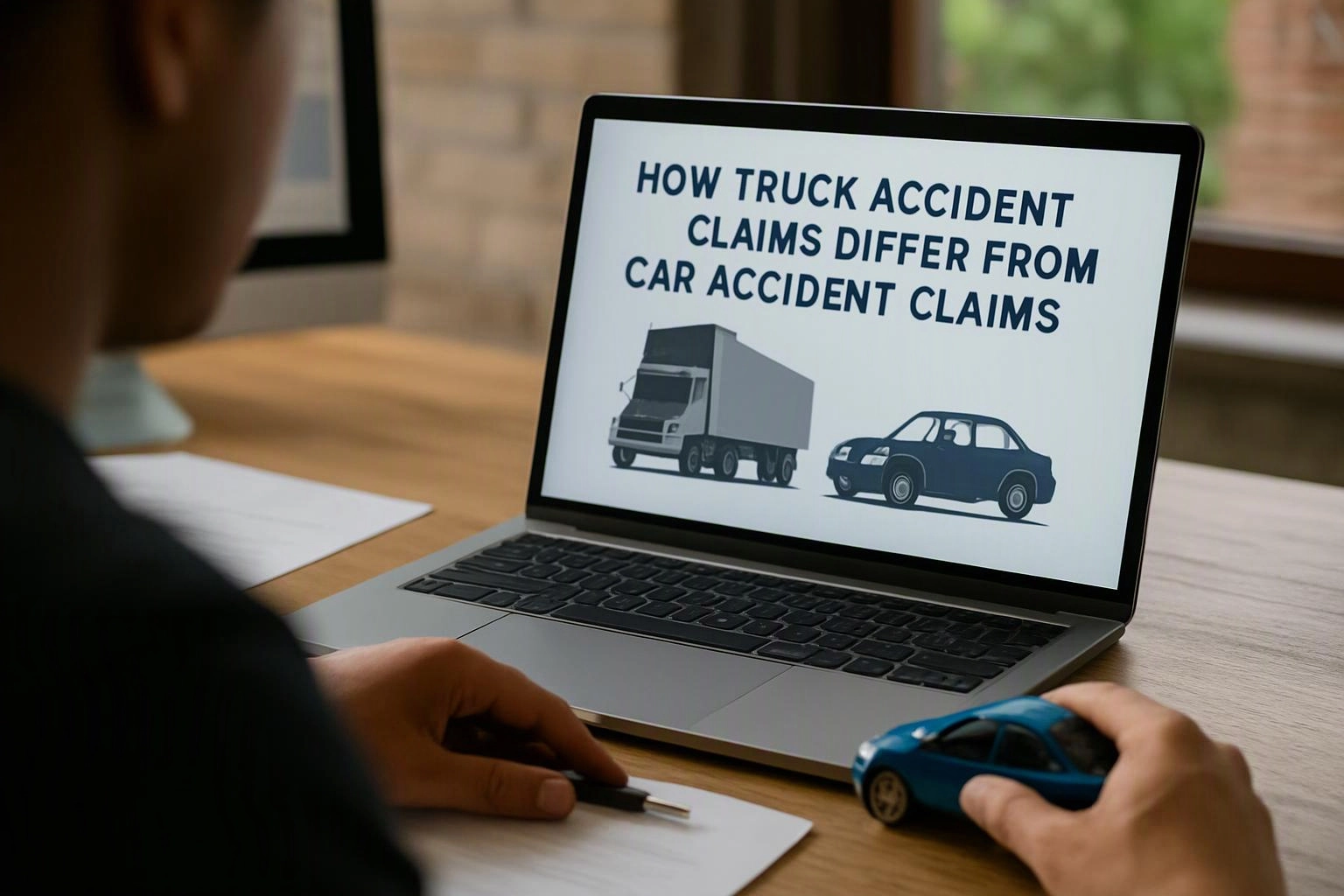
How Truck Accident Claims Differ From Car Accident Claims
Truck accident claims may differ from car accident claims because commercial trucking rules, multiple responsible parties, extensive evidence, and layered insurance can affect the investigation and resolution. Atlanta Auto Law examines the crash, identifies the responsible parties, preserves evidence, and develops the claim according to the available facts.
Request an EstimateQuick Picks
Truck and car claims share basic injury and damage categories, but the records and parties can differ. The right review depends on how the collision happened and what evidence exists.
- Truck accident claim: best suited to a broad investigation involving commercial records, multiple parties, and layered insurance.
- Car accident claim: best suited to a focused review of driver conduct, vehicle damage, medical records, and personal coverage.
How Truck and Car Accident Claims Compare
Truck accident claims generally require a broader investigation because commercial vehicles can involve trucking companies, drivers, maintenance providers, cargo interests, and commercial insurers. Car accident claims often center on the conduct of an individual driver and the available personal auto insurance.
| Factor | Truck accident claim | Car accident claim |
|---|---|---|
| Liability | May involve the truck driver, trucking company, owner, loader, maintenance provider, or manufacturer. | Often focuses on the individual driver, vehicle owner, or another motorist. |
| Evidence | May include an electronic logging device, inspection records, cargo records, and black box data. | May center on photographs, witness testimony, vehicle damage, and medical records. |
| Insurance | May include commercial auto insurance, primary liability coverage, excess insurance, or umbrella coverage. | More often involves personal auto insurance and possible uninsured motorist coverage. |
| Claim handling | Can require coordinated evidence preservation, coverage review, and accident reconstruction. | May follow a more focused investigation when liability is clear. |
Why Truck Accident Claims Can Involve More Responsible Parties
Truck accident claims can involve more responsible parties because ownership, employment, maintenance, loading, and vehicle design may be divided among different businesses or individuals. Negligence by one party may combine with vicarious liability for the conduct of an employee.
We examine the role of the truck driver, trucking company, vehicle owner, maintenance provider, cargo loader, and manufacturer. We then connect each party to the conduct and evidence that may support liability.
What Evidence Matters in a Truck Accident Claim?
Truck accident evidence can show what the driver did, how the vehicle was maintained, and whether cargo or scheduling contributed to the collision. We work to preserve evidence before routine business practices or vehicle repairs affect the record.
How Insurance Coverage May Differ Between Truck and Car Claims
Truck accident claims may involve commercial, excess, or umbrella insurance policies, while car accident claims more often center on personal auto coverage. Commercial insurance can require a broader coverage investigation because several entities may have separate policies.
We review the insurance adjuster's position, the available liability coverage, policy limits, exclusions, and the relationship between the driver and trucking company. We also assess whether additional coverage may apply to the collision.
How Injuries and Damages Are Evaluated
Truck accident damages are evaluated from the same basic categories as car accident damages, but the severity of a commercial truck collision can make medical, financial, and future-loss evidence especially important. We connect the claimed losses to the collision and the available records.
Our review may include bodily injury, medical treatment, property damage, lost income, lost wages, loss of earning capacity, pain and suffering, and permanent impairment. A fatal collision may also support a wrongful death claim based on the losses allowed by law.
What Makes a Truck Accident Claim Take a Different Path
A truck accident claim may take a different path because the investigation can require prompt preservation of commercial records, vehicle data, and evidence held by multiple parties. Evidence preservation helps address spoliation concerns when relevant information is lost or changed.
We may use accident reconstruction, vehicle inspection, federal motor carrier rules, and state traffic law to evaluate the claim. The findings guide settlement negotiations and may also support a civil lawsuit when the dispute cannot be resolved.
How Atlanta Auto Law Reviews Truck and Car Accident Claims
Atlanta Auto Law reviews truck and car accident claims through a structured investigation that connects liability, coverage, medical harm, and financial loss. Our team adjusts the review to the evidence and parties involved.
Advantages of Pursuing a Truck Accident Claim With the Full Commercial Record
A full commercial record can clarify how the collision happened and which parties may share responsibility. We seek records that connect the driver, vehicle, cargo, maintenance, and insurance issues to the claim.
Best for: A commercial truck collision involving serious injury, multiple defendants, disputed liability, or extensive business records.
Best Fit for a Truck Accident Claim
A truck accident claim is best suited to a commercial truck collision involving serious injury, wrongful death, multiple defendants, or complex liability. The claim may require analysis of a motor carrier, driver records, maintenance history, cargo loading, and layered insurance.
We build the investigation around the facts that make the collision different from an ordinary passenger vehicle crash.
Advantages of Pursuing a Car Accident Claim With Focused Collision Evidence
A focused evidence review can efficiently address a passenger vehicle collision when the main issues involve driver conduct, vehicle damage, medical treatment, and personal coverage. We still examine the full record needed to support liability and damages.
Best for: A passenger vehicle collision involving an individual driver, a personal auto policy, and relatively straightforward liability.
Best Fit for a Car Accident Claim
A car accident claim is best suited to a passenger car collision involving an individual driver, personal auto insurance, and straightforward liability. The investigation may focus on the traffic event, vehicle damage, witness testimony, medical records, and financial losses.
We keep the review focused while checking for disputed facts, additional insurance, and evidence that could change the result.
Which Type of Accident Claim Needs Legal Review?
Both truck and car accident claims may need legal review when liability, injury severity, insurance coverage, or evidence preservation is disputed. A truck accident lawyer can address commercial records and multiple parties, while a car accident lawyer can address individual driver conduct and personal auto insurance.
We review the claim deadline, insurance position, medical records, property damage, lost income, and available evidence. If you need help with a commercial vehicle collision, our Truck Accident Lawyer service explains how we approach the investigation.
Questions About Truck and Car Accident Claims
Are truck accident claims harder to prove than car accident claims?
Yes, truck accident claims can be harder to prove when multiple parties, commercial records, vehicle data, and layered insurance affect the investigation. Atlanta Auto Law identifies the relevant evidence and connects it to the responsible parties.
Can a trucking company be responsible for a truck driver's conduct?
Yes, a trucking company may be responsible for a truck driver's conduct when the facts support vicarious liability or another negligence theory. The driver's work relationship, company practices, and collision facts guide that analysis.
What records should be preserved after a truck accident?
Truck accident records to preserve may include electronic logging device data, driver qualification files, inspection records, maintenance records, cargo records, dispatch records, black box data, dashcam footage, and surveillance video. Crash scene evidence and medical records also matter.
Can a truck accident claim involve more than one insurance company?
Yes, a truck accident claim can involve more than one insurance company when the driver, trucking company, vehicle owner, or other responsible parties have separate coverage. Commercial auto insurance, excess insurance, umbrella coverage, and uninsured motorist coverage may require review.
Does a commercial truck accident require different evidence from a car accident?
Yes, a commercial truck accident may require different evidence because federal motor carrier rules, driver records, cargo records, maintenance history, and vehicle data may affect liability. A car accident claim may rely more heavily on traffic evidence, witness testimony, vehicle damage, and medical records.
What should I do if the trucking company's insurer contacts me?
If a trucking company's insurer contacts you, avoid giving a recorded statement or signing documents before you understand the request and your claim. Preserve your records and speak with our team about the collision, injuries, coverage, and evidence.
Talk With Atlanta Auto Law About Your Accident Claim
Atlanta Auto Law reviews truck accident claims and car accident claims by examining liability, evidence, insurance coverage, and damages. Contact us to discuss the facts and determine what claim investigation fits your collision.
Contact Atlanta Auto Law