
What Is Premises Liability?
Premises Liability is an area of law that addresses injuries linked to unsafe conditions on property. It concerns whether a property owner or another party responsible for the property may be legally responsible for an injury. A wet floor in a store is an example of a condition involved in such a claim.
Quick Facts About Premises Liability
- Category
- Personal injury law
- Used for
- Injury claims involving property conditions
- Common confusion
- An injury doesn't automatically establish fault
- Often discussed with
- Slip And Fall Claims
Key Takeaways About Premises Liability
- The person who controls a property isn't always its owner.
- Evidence of the property's condition can help explain a fall.
- A fall alone doesn't establish fault.
How Premises Liability Works
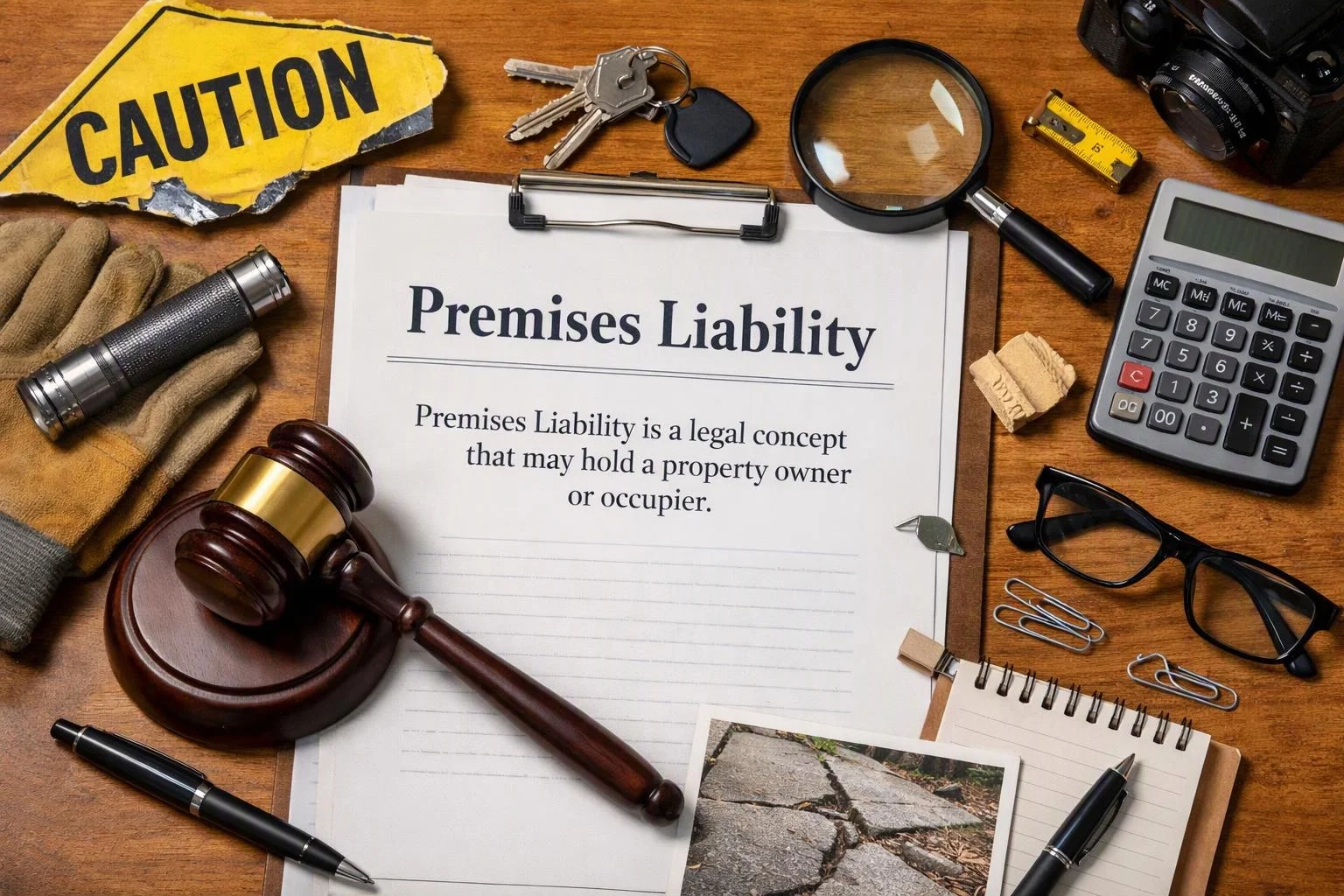
A premises liability claim looks at the condition connected to an injury. It also looks at who controlled the area and what that party knew about the condition. For example, a store may control an aisle where a shopper falls. Related service: Slip And Fall Claims.
Related glossary terms: Negligence, Duty of Care, Comparative Negligence.
Negligence concerns whether someone's conduct fell short of the care the situation called for. The facts may include whether a spill was visible or whether anyone had reported it. The claim also connects the condition to the injury, such as a spill that made the floor slippery.
The injured person's actions may also be part of the claim. For example, a property owner may argue that the person saw a clear warning. The evidence helps explain what each person knew and did.
From the Atlanta Auto Law team
When we review a slip and fall claim, we look at who controlled the area. We also check records that may show when the condition appeared. A cleaning log or incident report can help us understand what happened before the fall.
Premises Liability in Practice: A Real-World Example
A shopper slips on a spill near a store entrance and hurts a knee. The claim may turn on whether the store knew about the spill and had a chance to address it.
Related Services
Related Terms
Negligence
Negligence is a legal concept that describes a failure to use reasonable care when a person has a duty to do so.
Duty of Care
Duty of care is a legal obligation to act with reasonable care toward others who could be harmed by your actions.
Comparative Negligence
Comparative Negligence is a legal approach that considers each person's share of fault for an injury.
Damages
Damages are money sought or awarded for harm in a legal claim.
Atlanta Auto Law
Have Questions About Premises Liability?
Contact Atlanta Auto Law for practical guidance on Premises Liability and related personal injury attorney work in East Point.