
What Is a Bad Faith Insurance Claim?
A Bad Faith Insurance Claim is a legal claim that an insurer handled a covered loss unfairly or dishonestly, such as by ignoring relevant evidence, delaying a decision without a reasonable basis, or denying benefits contrary to the policy. The claim focuses on the insurer’s conduct, not only on whether the underlying accident caused injury.
Quick Facts About Bad Faith Insurance Claim
Category
Insurance dispute
Used for
Challenging unfair claim handling
Common confusion
A disputed claim is not automatically bad faith
Also called
Insurance Bad Faith, Insurance Bad Faith Claim
Often discussed with
Car Accident Lawyer
Key Takeaways About Bad Faith Insurance Claim
- The insurer’s conduct is central to the claim.
- Policy language and claim records help show what happened.
- Bad faith is not simply disagreement over claim value.
How Bad Faith Insurance Claim Works
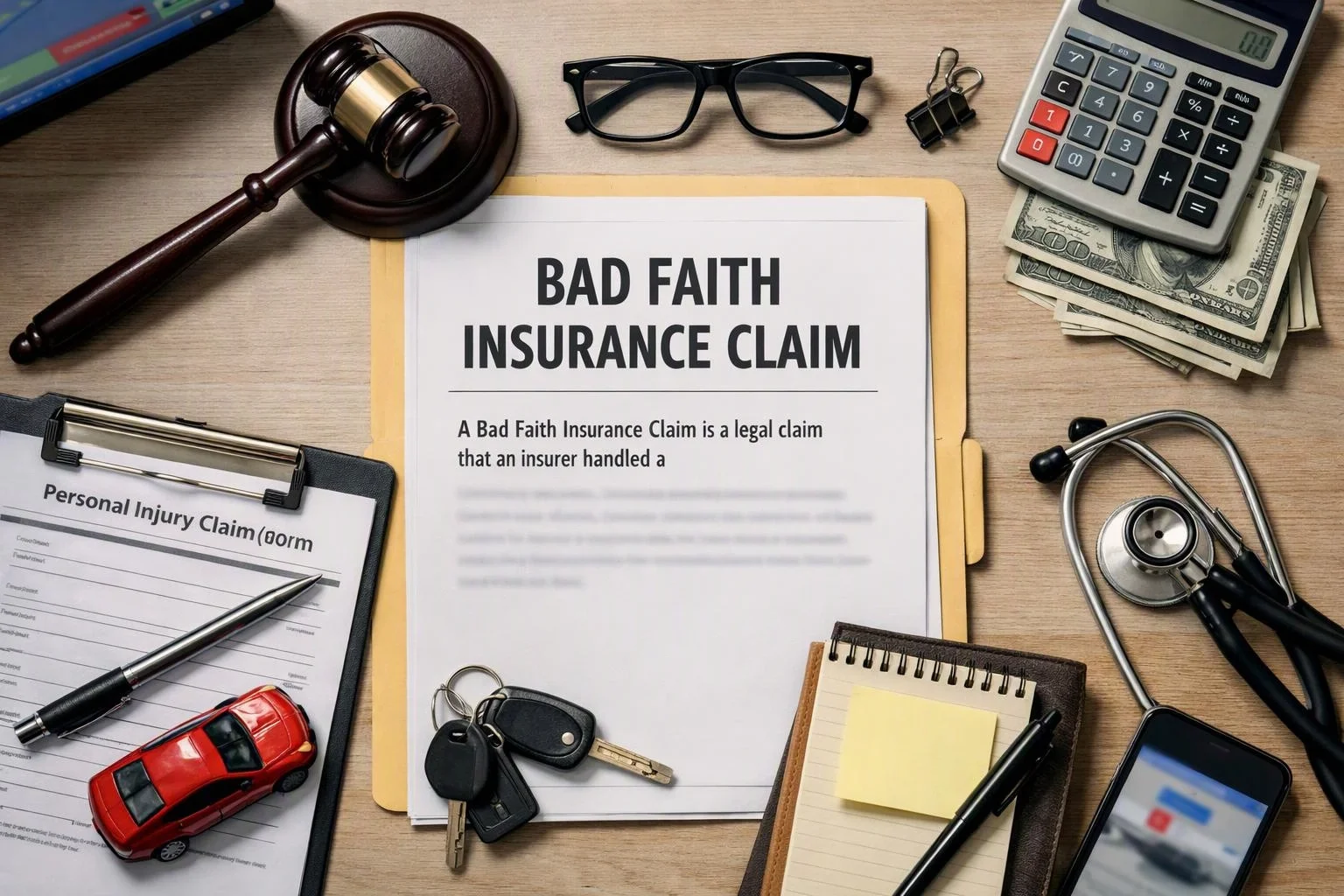
A Bad Faith Insurance Claim examines how an insurer responded after a policyholder reported a covered loss. The review may include the policy language, medical records, accident evidence, communications, payment decisions, and reasons given for a denial. A disagreement about value alone does not establish improper conduct.
Related glossary terms: Uninsured Motorist Coverage, Bodily Injury Liability, Settlement Demand.
The claim-handling record helps show whether the insurer investigated fairly and addressed relevant information. For an injured driver, the record may include liability evidence, treatment records, wage-loss documentation, and settlement discussions. The legal analysis connects the insurer’s actions to the coverage dispute and separates ordinary claim disagreement from conduct that may support a claim against the insurer.
From the Atlanta Auto Law team
When we review a possible bad faith issue, we compare the policy, the accident evidence, the injury records, and the insurer’s communications. We look for changes in the insurer’s explanation, overlooked evidence, and unexplained claim decisions. That review helps us separate a coverage dispute from conduct that may support a bad faith claim.
Bad Faith Insurance Claim in Practice: A Real-World Example
After a car crash, an insurer receives medical records and clear evidence that its policyholder caused the collision, then denies the injured driver’s claim without addressing that evidence. The claim may raise bad faith concerns because the insurer’s handling, not only the payment dispute, becomes central.
Related Services
Related Terms
Uninsured Motorist Coverage
Uninsured Motorist Coverage is insurance protection that may help pay for covered losses after a crash…
Bodily Injury Liability
Bodily Injury Liability is legal responsibility for physical harm caused to another person, often addressed through…
Settlement Demand
Settlement Demand is a formal written request for an insurance company or opposing party to pay…
Medical Records
Medical Records are written or electronic materials that document a person’s healthcare, including symptoms, examinations, diagnoses…
Atlanta Auto Law
Have Questions About Bad Faith Insurance Claim?
Contact Atlanta Auto Law for practical guidance on Bad Faith Insurance Claim and related personal injury attorney work in East Point.