
What Is Assumption of Risk?
Assumption of Risk is a defense in a personal injury claim based on a person’s knowing and voluntary acceptance of a specific danger. The defense may limit or defeat recovery when evidence shows the person understood the risk and chose to encounter it. Georgia courts examine the facts and the person’s conduct.
Quick Facts About Assumption of Risk
Category
Personal injury defense
Used for
Evaluating accepted dangers
Common confusion
Not the same as comparative negligence
Also called
Assumed Risk, Knowing and Voluntary Acceptance of Risk
Often discussed with
Construction Accident Lawyer
Key Takeaways About Assumption of Risk
- The defense concerns a known, specific danger.
- Awareness alone does not prove voluntary acceptance.
- Assumption of risk differs from comparative negligence.
How Assumption of Risk Works
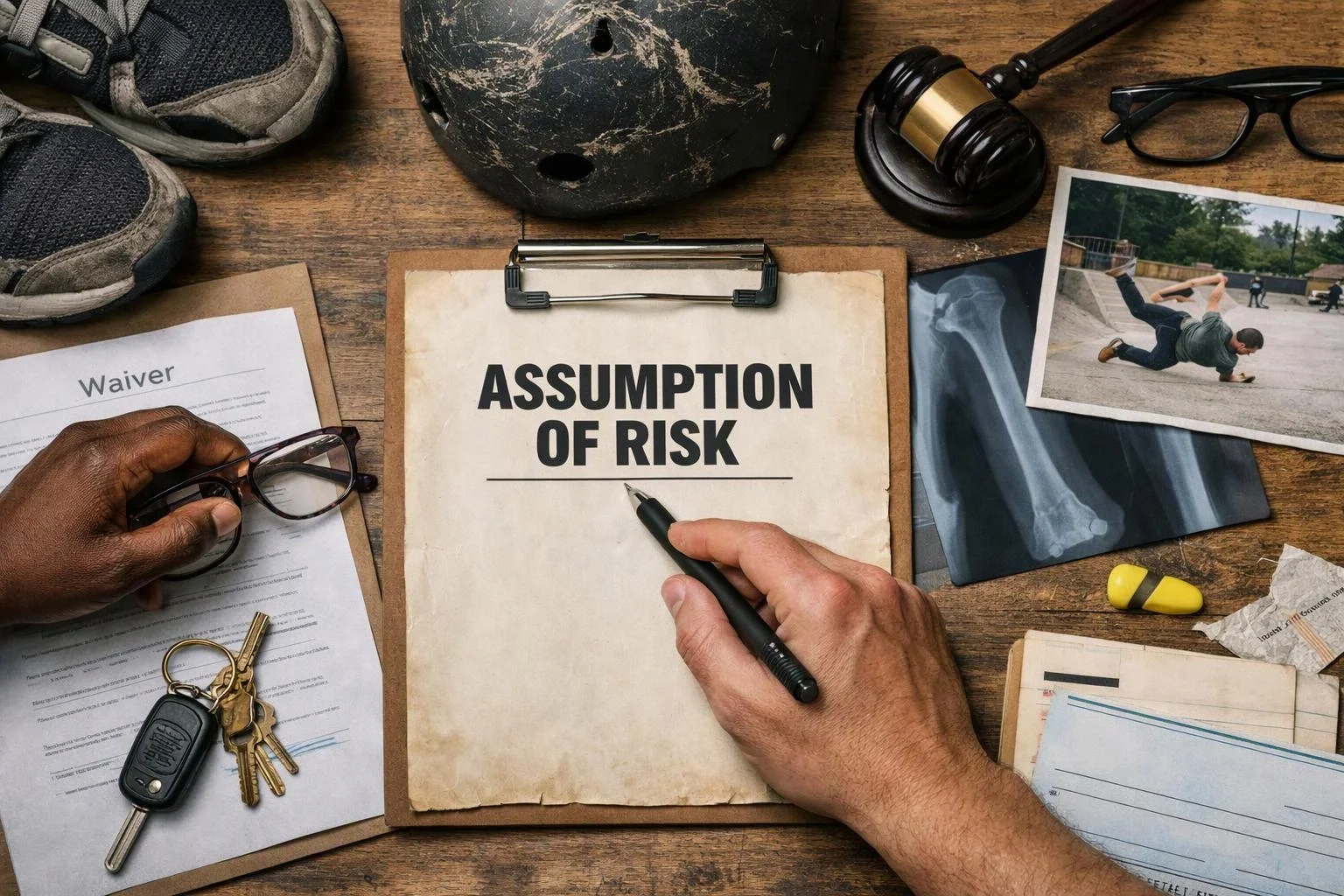
Assumption of Risk focuses on the injured person’s knowledge and choice before an accident. A person may assume a risk expressly through an agreement or impliedly through conduct. An implied assumption requires more than being present near a danger. The evidence must show awareness of the particular risk and a voluntary decision to face it.
Related glossary terms: Comparative Negligence, Negligence, Duty of Care.
Construction cases often involve warnings, training, work assignments, site conditions, and instructions. A signed document may support the defense, but the document does not decide every issue. Courts may examine whether the warning described the actual danger and whether the person had a realistic choice. Assumption of risk also differs from comparative negligence, which generally concerns how a person’s conduct contributed to an injury.

From the Atlanta Auto Law team
When we review a construction accident claim, we examine the alleged danger, the warnings, the work instructions, and the available choices. We also compare the accepted-risk argument with evidence about unsafe conditions, supervision, and the conduct of other parties. The facts must connect the person’s knowledge to the specific danger.
Assumption of Risk in Practice: A Real-World Example
A construction worker sees an uncovered opening near a work area after a supervisor warns about it. The worker enters the area because the assigned task leaves no practical alternative, and the opening causes a fall. The warning may support an assumption-of-risk argument, but the worker’s lack of a reasonable choice can affect that analysis.
Related Services
Related Terms
Comparative Negligence
Comparative Negligence is a legal rule that assigns each party a share of responsibility for an…
Negligence
Negligence is a failure to use reasonable care under the circumstances, causing harm to another person…
Duty of Care
Duty of Care is a legal responsibility to act with reasonable caution toward people who could…
Gross Negligence
Gross Negligence is conduct showing a serious disregard for the safety of others, beyond ordinary carelessness…
Atlanta Auto Law
Have Questions About Assumption of Risk?
Contact Atlanta Auto Law for practical guidance on Assumption of Risk and related personal injury attorney work in East Point.