
What Is Admissible Evidence?
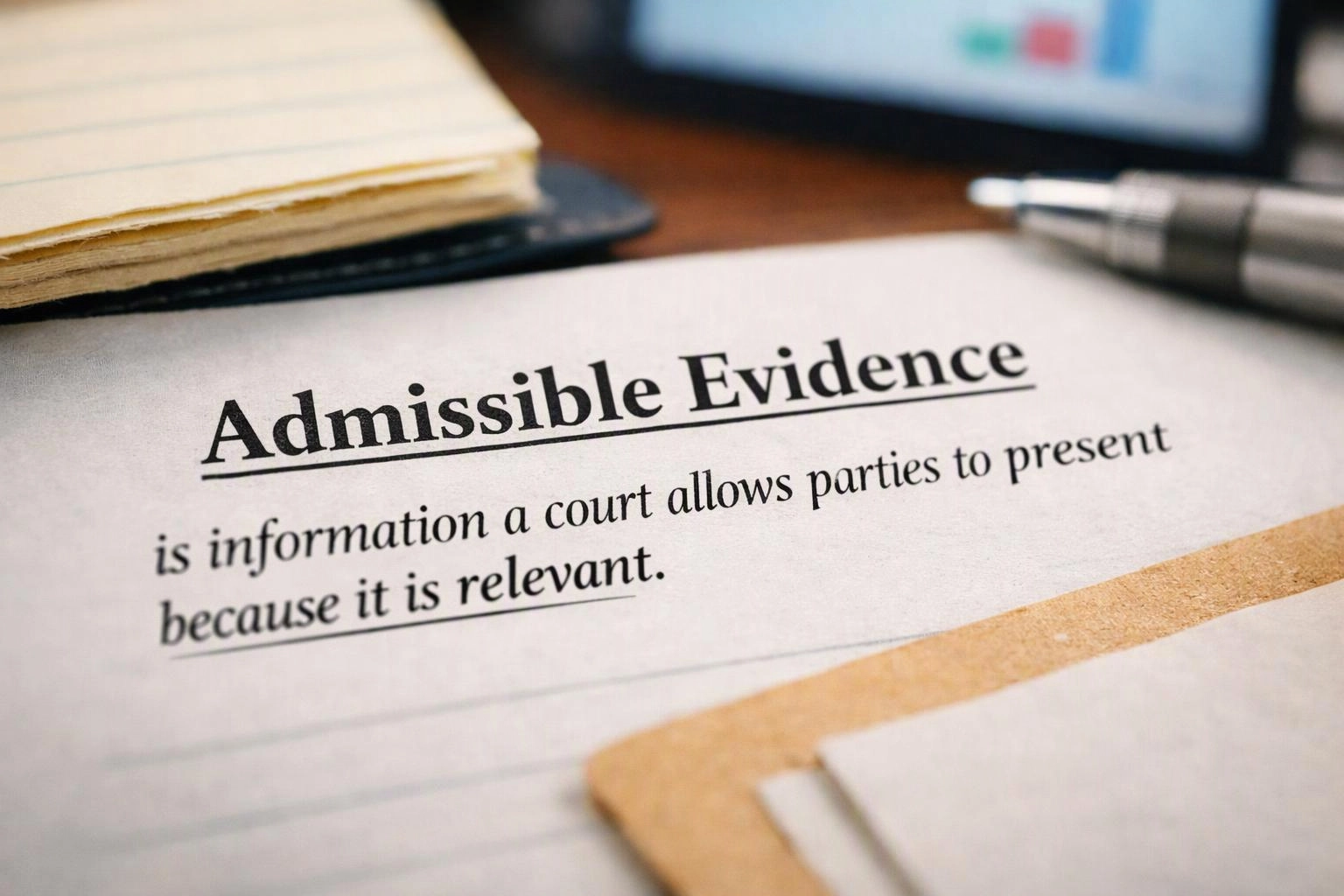
Admissible Evidence is information a court allows parties to present because it is relevant, reliable, and obtained in a legally acceptable way. The evidence may include testimony, medical records, photographs, expert opinions, or other documents. A judge may exclude evidence that lacks a proper foundation, contains unfair prejudice, or violates applicable legal rules.
Quick Facts About Admissible Evidence
Category
Courtroom evidence standard
Used for
Proving facts in a legal claim
Common confusion
Relevance alone does not ensure admissibility
Often discussed with
Medical Malpractice Lawyer
Key Takeaways About Admissible Evidence
- A judge decides whether evidence may be considered.
- Evidence needs a foundation that connects it to the claim.
- Relevant evidence is not automatically admissible evidence.
How Admissible Evidence Works

Admissible evidence enters a case after the court determines that the material relates to a disputed fact and can be presented fairly. The party offering the evidence must connect it to the case through a proper foundation. That foundation may come from a witness who created, saw, received, or understands the material.
Related glossary terms: Medical Records, Expert Witness, Causation.
Medical records may help show treatment, symptoms, and the timing of care in a medical malpractice claim. A healthcare professional or records custodian may explain how the records were created and maintained. An expert witness may interpret technical medical information and address whether the care met the applicable professional standard. The judge can limit or exclude material that lacks sufficient support, relies on speculation, or creates unfair prejudice.
From the Atlanta Auto Law team
When we prepare a medical malpractice claim, we connect each proposed piece of evidence to a specific issue in dispute. We review medical records, witness testimony, and expert opinions for authenticity, foundation, and relevance. We also identify gaps that could give the opposing side grounds to challenge presentation.
Admissible Evidence in Practice: A Real-World Example
A patient claims that a surgical error caused a lasting injury. Medical records showing the procedure and follow-up care may be admissible when a qualified witness can authenticate them, while an unsupported statement about what happened may be excluded.
Related Services
Related Terms
Medical Records
Medical Records are written or electronic materials that document a person’s healthcare, including symptoms, examinations, diagnoses…
Expert Witness
An Expert Witness is a professional with specialized knowledge who gives an independent opinion to help…
Causation
Causation is the connection between a healthcare provider’s conduct and a patient’s injury or loss. In…
Atlanta Auto Law
Have Questions About Admissible Evidence?
Contact Atlanta Auto Law for practical guidance on Admissible Evidence and related personal injury attorney work in East Point.